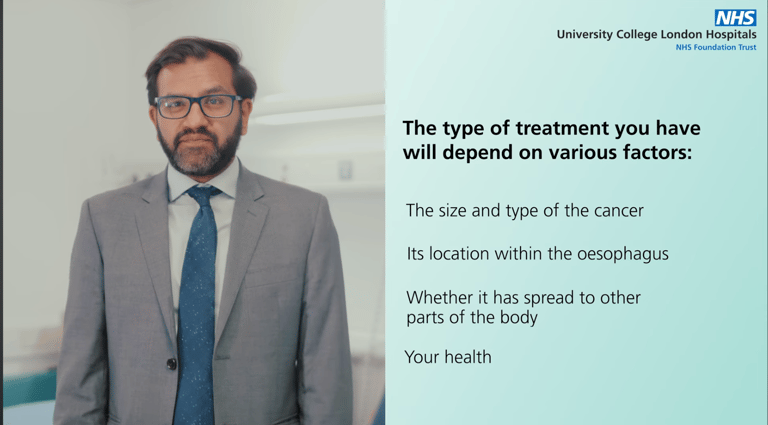
Please watch these videos that I created for my patients at UCLH, available on YouTube, which help to explain oesophageal cancer and its treatment further:
https://youtu.be/h96pQXuj6sY?si=7mA3R5mR_c90xnJW
https://youtu.be/3oE6uQUh4SA?si=W4XZR-UEnLSX2iQz
https://youtu.be/0h3oKWYOfo0?si=jmSvdOvrzCr9mUVT
https://youtu.be/ou8CncvaTmM?si=C3SQgJRJD4JkbcoC
Oesophageal Cancer
Oesophageal cancer is a serious, but relatively uncommon cancer in the UK, affecting the long tube that carries food from the mouth to the stomach. It is more common in older adults and is often linked to long-term acid reflux, smoking, heavy alcohol use, or a condition called Barrett’s oesophagus. Symptoms can be subtle at first, but often include difficulty swallowing (dysphagia), persistent heartburn, unexplained weight loss, or chest discomfort. Treatment varies depending on the stage and may involve surgery, chemotherapy or radiotherapy. Early diagnosis greatly improves outcomes, so persistent symptoms should always be checked by a healthcare professional.
Oesophageal cancer surgery, known as an oesophagectomy, is a major operation in which part or all of the oesophagus is removed, often along with nearby lymph nodes, and the stomach is reshaped and pulled up into the chest to reconnect the digestive tract. It is typically recommended for cancers that have not spread extensively and can offer the best chance of long-term survival when combined with chemotherapy or chemoradiotherapy. The procedure can be performed through open surgery or minimally invasive techniques, depending on the patient’s condition and the tumour’s location. Recovery can be lengthy, and patients may experience changes in eating habits, swallowing, and digestion, but specialised rehabilitation and nutritional support help many people regain a decent quality of life after surgery. Nonetheless, this remains one of the biggest operations a person can undergo, so patients need to be healthy and fit to undergo it.

The London Clinic
20 Devonshire Place, London, W1G 6BW
Tel: +44 (0)20 4527 7825